
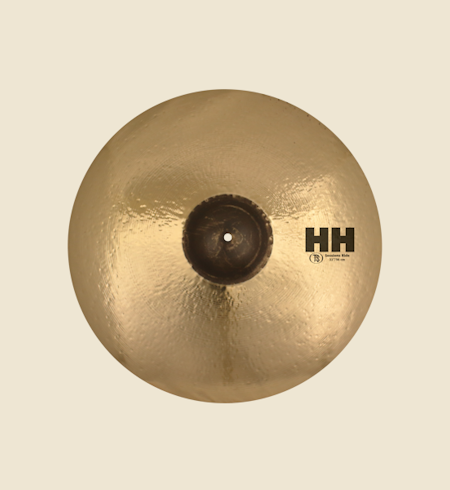
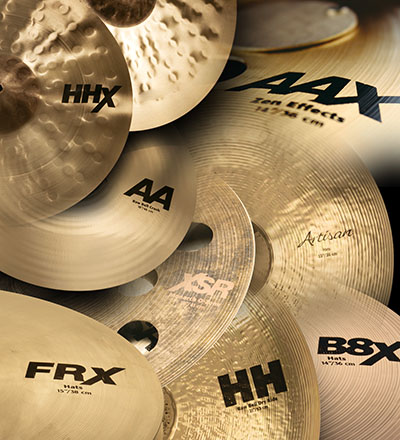
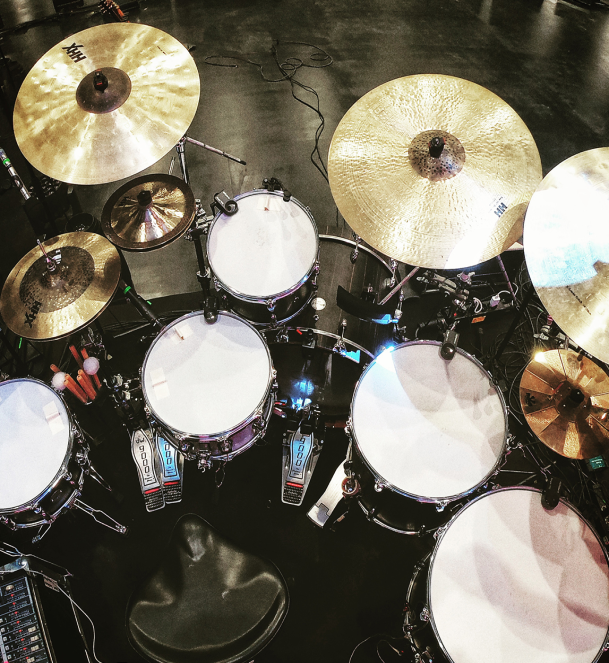
The language of cymbals can feel like a whole new world, but understanding key terms is essential for every drummer. We believe that knowing the nuances of cymbal terminology helps you unlock the sound you are looking to achieve. Here’s a comprehensive guide to help you navigate the terms you’ll encounter when exploring cymbals, their sounds, their applications, and what they actually mean.
More Common Terms: What Do You Hear?
Sustain
The duration a cymbal vibrates after being struck. This can range from short, quick bursts to long, resonant tones. Sustain is influenced by the cymbal’s thickness, size, weight, shape, tonal grooves and to a lesser degree, its hammering and finish. When all things are equal, smaller cymbals produce a shorter sustain, while larger, heavier cymbals can ring out for several seconds. The 20” Artisan Crash is designed for maximum sustain with a stick or mallet.
Wash
The characteristics of sound following the attack. Where sustain refers to the length of time, “wash” applies to the description of the sound during the sustain. A cymbal with a pronounced wash creates a wide, immersive soundscape. The HHX Complex Series excels at providing a lush, washy tone. Sustain and wash qualities are also referred to as “decay”.
Dry
Dry cymbals have shorter sustain, muted wash that emphasizes stick definition and precision. They’re often favored in settings where clarity is preferred. The AA Raw Bell Dry Ride is a prime example of a cymbal that prioritizes dryness for articulate playing.
Cut
The ability of a cymbal to be clearly heard in a mix, even with loud instruments. Cymbals with strong cut often have a higher pitch. For high-energy performances, the 18” Paragon Crash delivers explosive clarity.
Attack
How quickly a cymbal produces sound after being struck. Fast-attack cymbals respond instantly, making them ideal for accents and sharp punctuation in music. The AAX MAXX Splashes are known for their quick, impactful response.
Warm
A smooth, rich sound with mid to low frequency overtones. Warm cymbals are often associated with a vintage or classic sound and are a favorite for jazz and blues drummers. SABIAN’s HH Series exemplifies warm tones that blend seamlessly into musical settings.
Dark
Dark cymbals emphasize lower frequency partials, resulting in a more subdued, complex tone. They are preferred for genres like jazz, fusion, and orchestral music, where subtlety is key. SABIAN’s HHX Legacy models are celebrated for their deep, dark soundscapes.
Bright
Bright cymbals emphasize higher frequencies, delivering sharp tones that stand out in loud environments. These cymbals are commonly used in rock, pop, and metal. SABIAN’s AAX Series offers unmatched brightness for energetic performances.
Trashy
A raw, distorted, biting sound that’s perfect for explosive accents and unique textures. Trashy cymbals, like Chinas, O-Zones, and Stacks are now commonly used across all genres of music. SABIAN’s 16” XSR Sizzler Stack delivers a signature trashy character.
Clean
A harmonious sound profile with focused overtones. Clean cymbals are perfect for drummers seeking precision and tonal clarity. SABIAN’s Paragon Series delivers a polished, clean tone ideal for professional settings.
Others to Consider
Shimmering: Light, sparkling, and lively overtones.
Explosive: Immediate, loud burst of sound, typical of crash cymbals.
Mellow: Smooth, warm tone with a soft attack.
Focused: Controlled sound with a tight sonic range, not overly complex.
Rich: Full-bodied sound with complex layers of overtones.
Raw: Untamed, earthy sound with an organic feel.
Complex: Multi-layered sound with shifting washy overtones.
Controlled: Sound that stays tight and doesn’t “splash out” too much.
Glassy: Very clear, smooth, high-end shimmer.
Buttery: A soft, smooth response under the stick, especially used for hi-hats and rides.
Sizzle: A slight buzzing or sustained shimmer (especially when rivets are used).
Pangy: Gong-like, metallic, exotic attack (think: China cymbals or Gongs).
Responsive: Cymbal reacts easily to light touch or stick.
Fast: Quick attack and quick decay (sound disappears quickly).
Slow: Longer buildup of volume, slower decay.
Bouncy: Good rebound off the stick, feels lively.
Dead: Very short sustain, no lingering sound.
Sloshy: Loose, messy hi-hat sound when open.
Tight: Compact, clean and direct response.
Loose: Open, airy feel, often for expressive or open hi-hat sounds.
Finding Your Sound
Understanding these terms empowers drummers to choose cymbals that complement their style and musical goals. SABIAN’s extensive lineup has something for every player. Explore the complete collection today!